
Introduction
Artifi cial Intelligence (AI) is no longer a future concept in accounting—it is already reshaping how tax compliance is managed across the UK. From automated data checks to real-time anomaly detection, AI-powered tools are becoming an integral part of modern accounting workfl ows.
However, one critical point must be made from the outset:only HMRC-approved and HMRC-compliant software should ever be used for UK tax compliance.
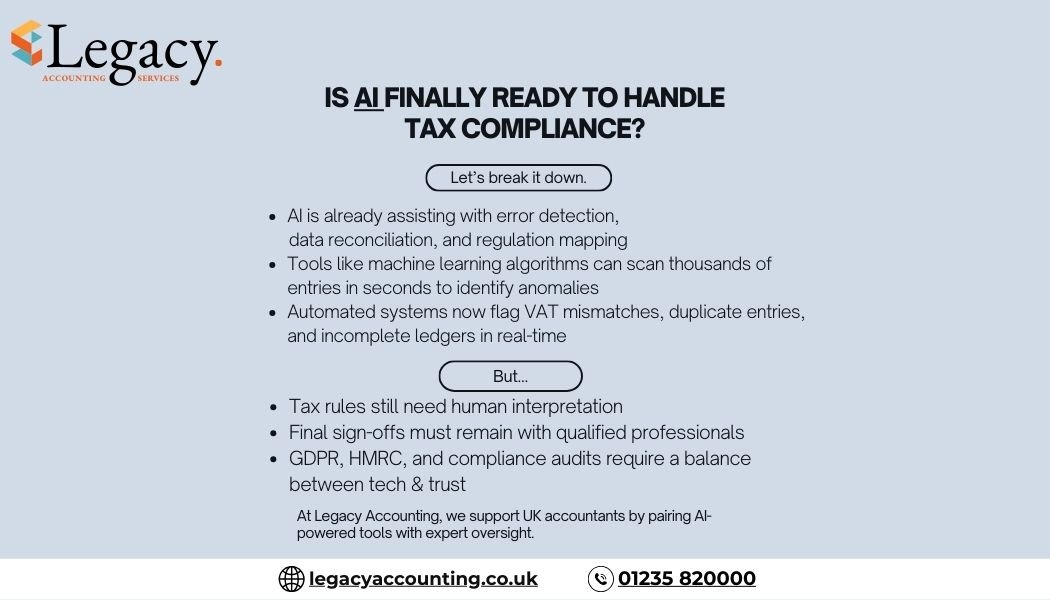
So, is AI fi nally ready to handle tax compliance?
Let’s break it down.
How AI Is Already Supporting Tax Compliance (Using HMRC-Approved Software)
When implemented through HMRC-recognised and Making Tax Digital (MTD) compliant systems
, AI can signifi cantly improve efficiency without compromising compliance.
1. Smarter Error Detection
AI-enabled accounting platforms can scan thousands of entries in seconds to identify:
- Missing or incomplete transactions
- Duplicate postings
- Unusual or inconsistent fi gures
When built into HMRC-approved software, these checks help reduce errors before submissions are made to HMRC.
2. Faster Data Reconciliation
AI is particularly effective in bank and VAT reconciliation. Machine learning tools embedded within compliant accounting software can:
- Automatically match transactions
- Flag discrepancies in real time
- Reduce manual processing
This ensures records remain accurate and aligned with HMRC reporting requirements.
3. Real-Time Compliance Monitoring
Modern, compliant systems can automatically flag:
- VAT return mismatches
- Incomplete ledgers
- Reporting inconsistencies across submissions
These features help accountants stay aligned with HMRC’s digital compliance standards, particularly under Making Tax Digital.
Where AI Still Needs Human Oversight
Even when using HMRC-approved systems, AI must always operate under professional supervision.
1. Tax Legislation Requires Interpretation
UK tax law is complex and frequently updated. AI cannot:
- Interpret grey areas in legislation
- Assess unique client circumstances
- Apply professional judgement
Only qualified accountants can correctly interpret tax rules and ensure the right treatment is applied.
2. Responsibility and Final Sign-Off
HMRC does not hold software accountable—responsibility remains with the accountant.
Final reviews, approvals, and submissions must always be completed by qualified professionals using compliant software.
3. Data Protection, Security, and Trust
GDPR compliance, audit trails, and HMRC scrutiny require:
- Secure data handling
- Clear reporting history
- Transparent processes
Using unapproved or non-compliant tools introduces unnecessary risk and should be avoided entirely.
The Right Approach: HMRC-Compliant AI Tools + Expert Oversight
The future of tax compliance is not about replacing accountants with AI. It is about using
HMRC-approved technology to enhance professional expertise.
At Legacy Accounting Services, we support UK accountants by:
- Using only HMRC-recognised and compliant software
- Integrating AI-powered tools responsibly
- Ensuring all work is reviewed and signed off by experienced professionals
This balanced approach delivers efficiency without sacrifi cing accuracy, compliance, or trust.
Final Thoughts
AI is ready to support tax compliance—but only when:
- Used within HMRC-approved systems
- Combined with expert human oversight
- Applied responsibly and securely
Tax compliance in the UK must always be built on a foundation of trust, regulation, and professional accountability. Technology enhances that foundation—but it can never replace it.
If you’d like to explore how HMRC-compliant AI tools can improve your tax processes while keeping expert control where it matters most, Legacy Accounting Services is here to help.
📧 Email: info@legacyaccounting.co.uk
🌐 Website: legacyaccounting.co.uk
🔗 Follow us: LinkedIn | Instagram | Facebook